
Strength & Conditioning Training Gear for Runners (2026)
I place a great deal of value on strength training for the runners I’ve coached the past 20 years. Cut the junk miles and use that time to build and maintain a strong foundation in strength.
Gear builds the engine. On race day, holding it together is a head game as much as a body one. Here’s a free tool I made for that part. Get the free Green Supercharger →
In my coaching books, I often devote full chapters on strength training, as well as strength workouts into associated training plans.
In Hill Running: Survive & Thrive, I stress the importance of strength and conditioning training to improve a runner’s performance when running up and down hills. And in Running Heavy, I also place a huge emphasis on not only building a foundation based on a strength training, but also in using a range of tools to improve speed, acceleration and power. This includes running while dragging tires, pushing sleds, and while wearing a weight vest.
This article lists gear in order of priority, from what I consider must-have items to wish list items. I’ve organized the list with a base assumption that funds are limited and that each amount spent must have maximum impact and the best bang-for-buck for the buyer.
You may also want to check out my article on planning a race season and my thoughts on how to build a home gym that you’ll actually use. This includes barbells and some other excellent equipment that takes up a little more space, but is well worth it.
Gear Shopping List for Runners
Must-have Strength & Conditioning Gear
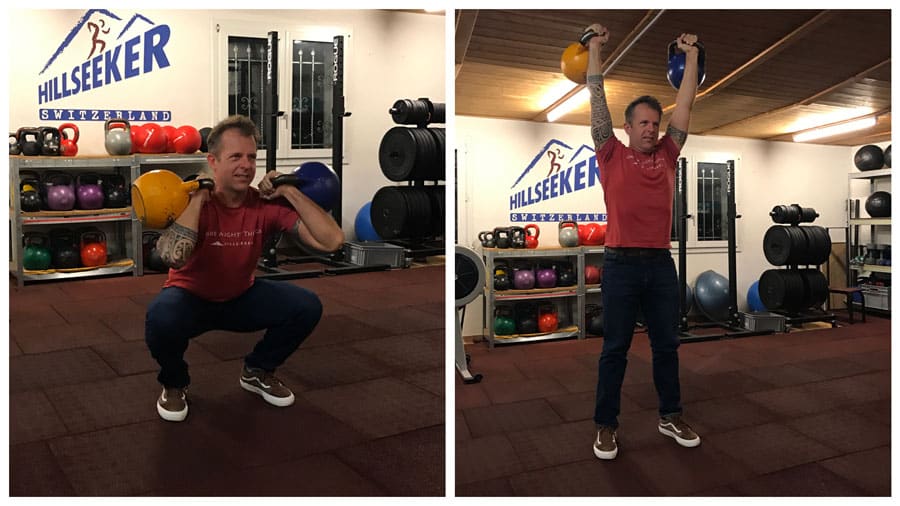
Kettlebell: If I only had the budget for one item of equipment, I’d buy a kettlebell. Even when I owned a CrossFit gym for 5 years and had access to all the equipment I ever wanted at the gym, the one piece of training gear I kept at home was a kettlebell. This one simple item allows you to do all the key strength training you need as a runner. Plus, it’s outstanding for core development, addressing imbalances in your body, and developing power. A kettlebell (or a few) takes up minimal space and is the best bang-for-buck for runners when it comes to strength training equipment. It’s particularly useful in building core strength, which is extremely valuable to a runner’s ability to maintain efficient technique under intensity and over long durations.
The runners I’ve coached who commit to consistent kettlebell work notice it most in the final third of a race, when everyone else’s form is falling apart. Goblet squats, tactical lunges, and weighted step-ups all transfer directly to running performance. I’ve used kettlebell training extensively with the multi-sport athletes I’ve coached over the years, including ultra marathoners, triathletes, and military athletes.
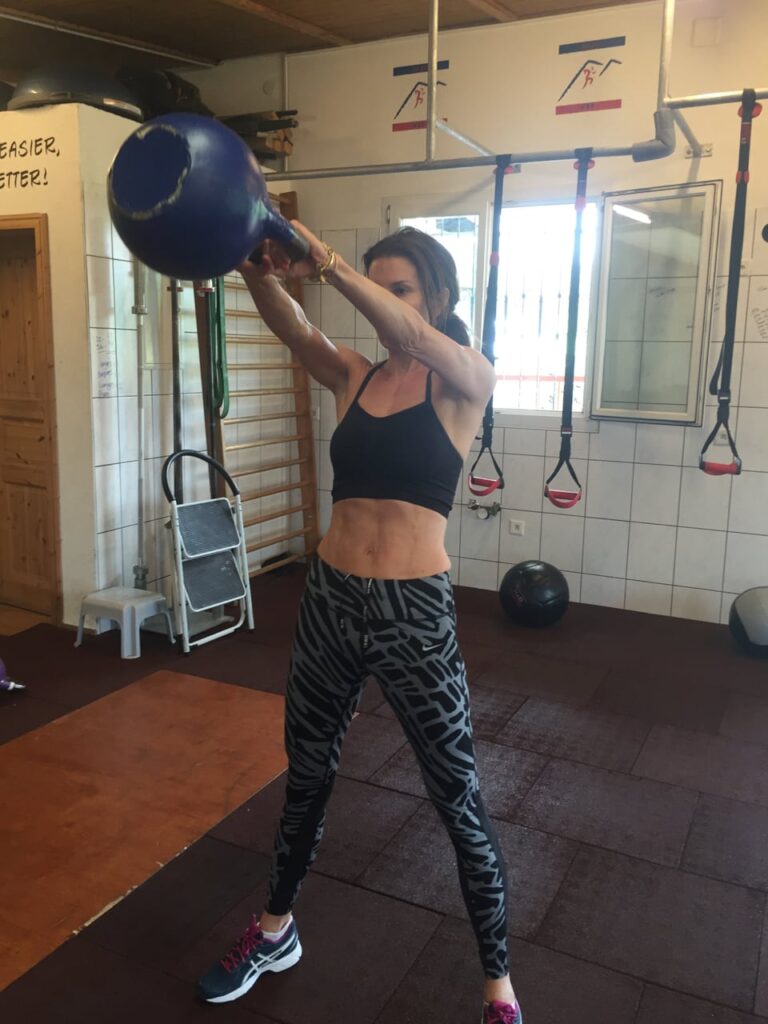
My go-to kettlebell is a 53lb/24KG Rogue Competition model. My advice is to buy a high quality kettlebell. These are heavy devices and not easy to get rid of. My first few kettlebells have terrible handles and I regret buying them. For a budget option, a basic cast iron kettlebell works fine for goblet squats, carries, and lower-rep work.
Here’s something else I’ve used with runners for years: I coach with colors. Green especially, for the breath side. Energy, oxygen, boost. It’s part of my best guided visualization audio pre-race, which I call Ignition Prime.
I made the first one free. It includes the full green video from my course, a coaching audio session, a 5-page reference guide, and a guided visualization.
Get the free Green Supercharger →
Jump Rope: Simple, portable, great for metabolic conditioning (try 5 rounds of 90sec rope skipping + 10 burpees + 10 sit-ups for a great little workout). I have a collection of ropes for different workout types, including a speed rope and a heavy rope. For runners, a jump rope is also an automatic reinforcement of proper foot landing position, as well as a great conditioning tool for an efficient foot pull.
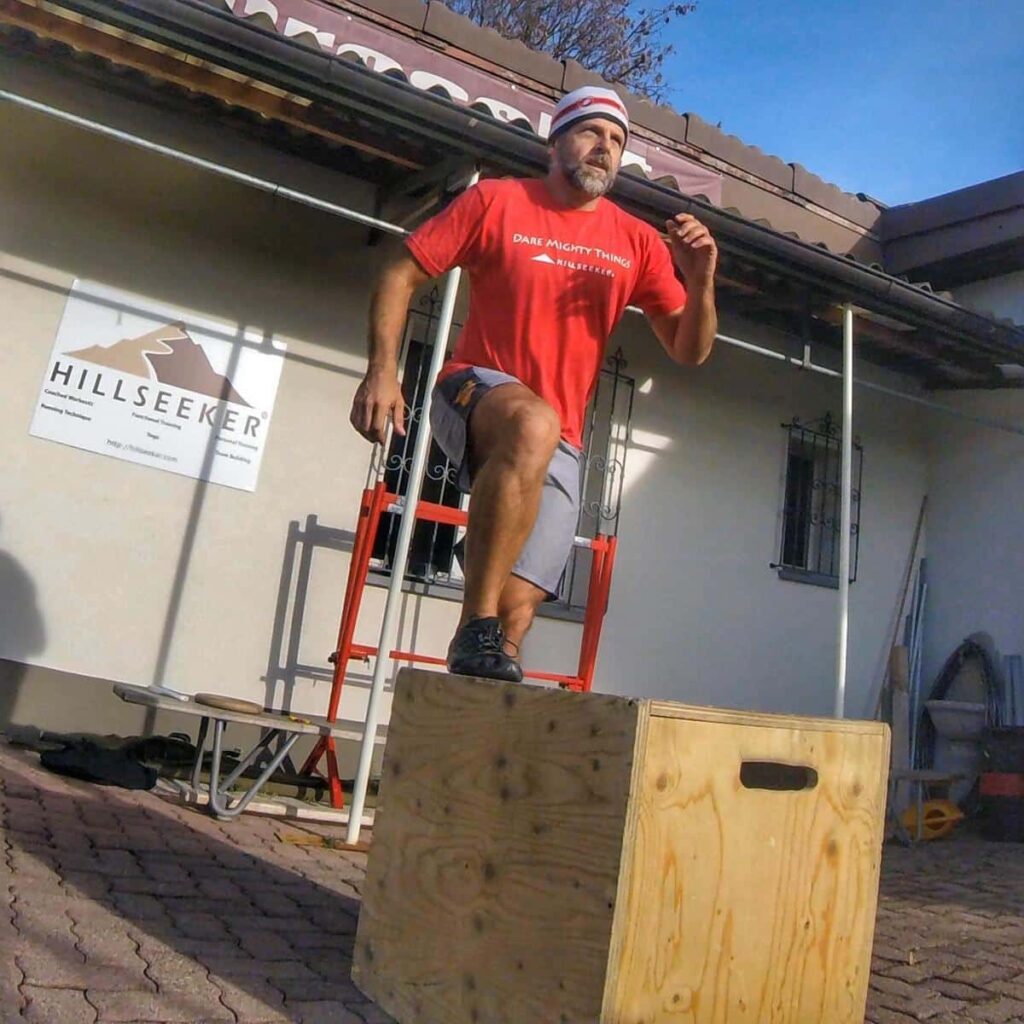
Plyo Box: Weighted box step-ups, box jumps and more. You can accomplish a lot with a plyo box, or if you’ve got one handy, a nice big rock to jump up on! For runners, plyo boxes work well in combination with sandbags and kettlebells for workouts involving step-ups and climbing simulation. Order a screw-together box or make your own.
I built a few boxes for my training center over a decade ago and they have been hammered by gym use ever since. I think they’ll last another 10 years! Step-ups with a kettlebell on a plyo box are some of the most runner-specific strength exercises you can do.
Nice to Have Strength & Conditioning Gear
Barbell and Squat Stand: It was not easy for me to decide whether I consider this a Must-Have or Nice-to-Have item for this article. If you are serious about improving your running performance, then I’d highly recommend that you have a barbell setup at home, or at least easy once-a-week access to one.
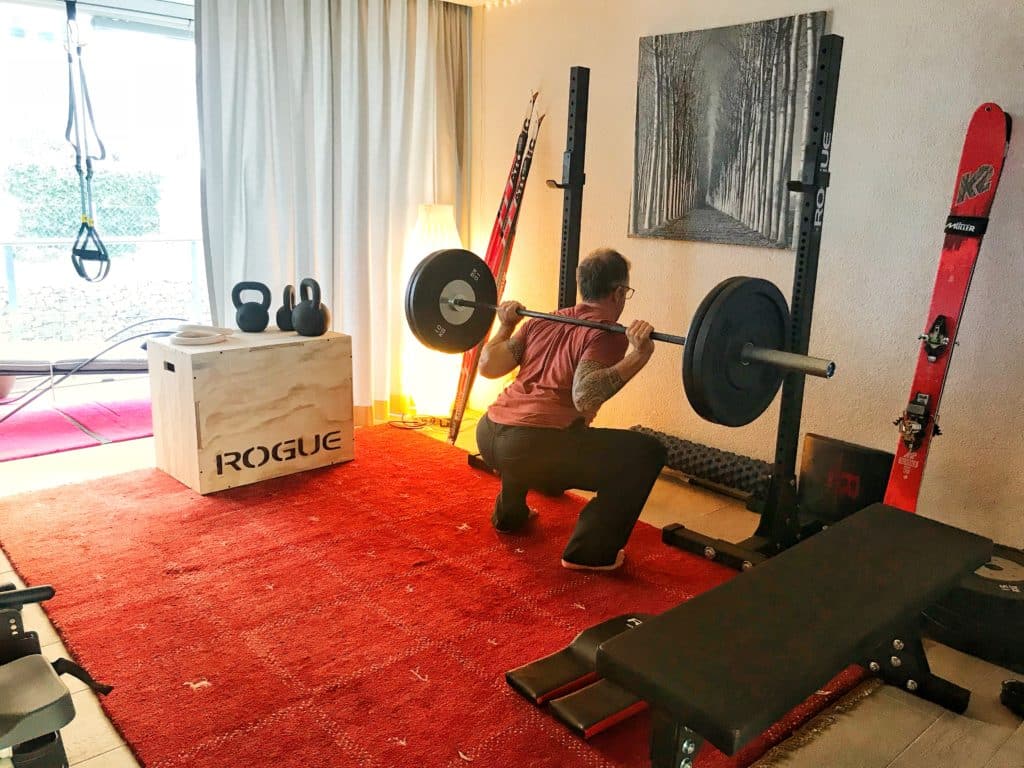
I cover this topic in more detail in my home gym article, but my general recommendation is a simple barbell, sturdy but simple rack, and bumper plates.
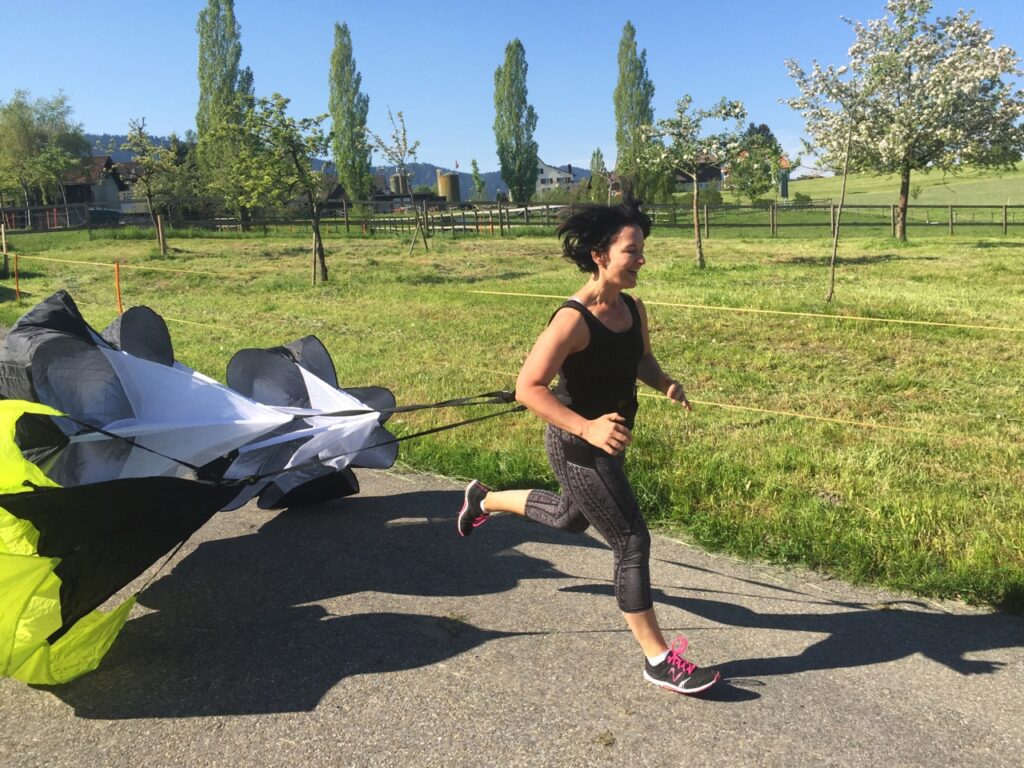
Sprinter’s Chute: I love sprinter’s chutes! In addition to the resistance element, they are fun to use, and that creates some extra motivation for doing your high intensity work. It’s worth getting two, as you’ll likely want the extra resistance.
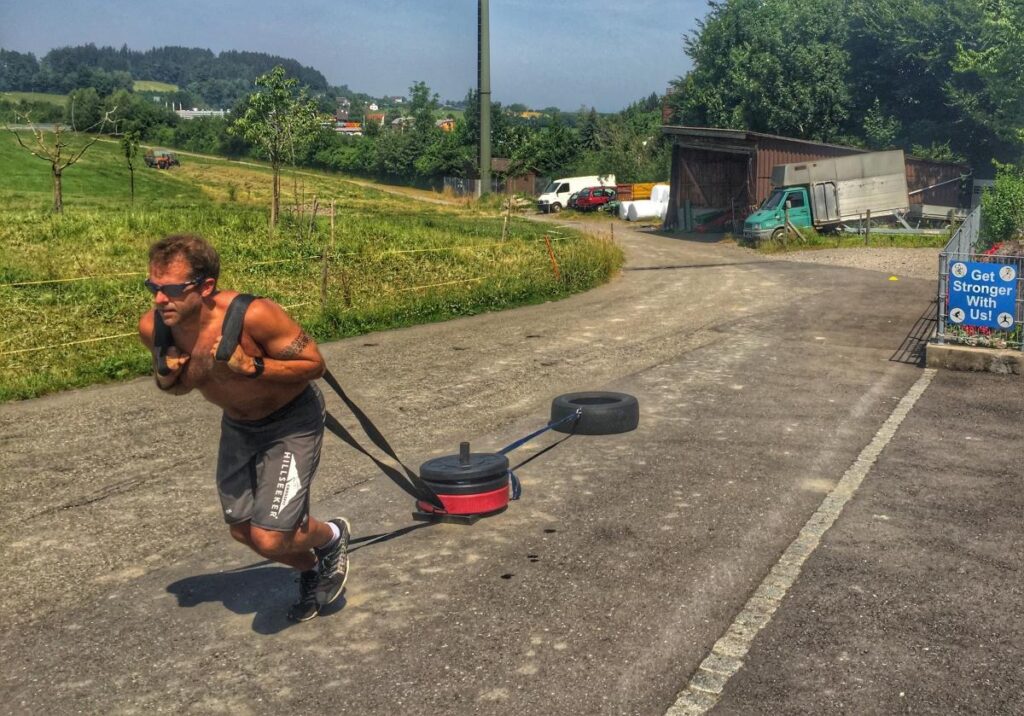
Sled: I’ve had a few types of sleds at the gym I owned, years before HYROX made them popular. They were excellent and indestructible. Even with ten years of use at the gym I built, it proved indestructible. Well, it destroys people and roads, but not itself.
For runners, sled work builds functional strength that transfers directly to running, especially hill running and the grinding portions of ultra-distance events.
If you’ve got welding skills or a friend in the business, you could custom-fabricate one. You can also make a sled with an old tire. Drill a hole in the tire and insert an eye bolt. Lock it off inside the tire with a locking nut. Use a carabiner attached to a rope or webbing to attach it to the eye bolt on one end and your belt or vest on the other. Throw a sandbag on the tire to increase the load.
Agility Ladder: Great tool for training agility and running technique.
TRX or Suspension Trainer: Portable, great for business trips and hotel room workouts. Tip: bring it to the track and incorporate it into or immediately following a speed session. It makes core training much more interesting than trying to knock out 100 sit-ups after a run.
Sandbag: Endless training opportunities. Plus you can substitute them in for barbells in a lot of functional workouts, which I think is even more functional. Read this guide on how to make your own.
Weight vest or weighted ruck: I started my journey with weighted running in preparation for racing the Marathon des Sables, where runners must carry survival gear and food for a week. Actually, I started with weighted running when I was 70lbs overweight back in the ’90s and decided to sign up for an Ironman triathlon to lose weight!
Training with a vest adds intensity, adversity and resistance. For runners, it’s particularly valuable for hill training and race-specific preparation. There has been some great innovation in weight vests the past few years. Look for something that moves with you but doesn’t bounce.

You could also go with a ruck or backpack and fill it with a sandbag or water weight. GORUCK has been a leader for years in creating functional, durable rucks and they offer a kit that includes a weight plate, which makes it easier to just grab your weighted ruck and go.
When I was training for an expedition on Aconcagua in the Andes, I used to do hill repeats (fast hiking) with a 70lb pack filled with water containers. I’d dump the water at the top of the climb and refill the containers from a stream at the bottom.
Foam Roller: You break it, you fix it. After a combined strength and endurance training program, active recovery matters. Get a foam roller and get busy with some active recovery.
Any more and you’re looking at a home gym setup. If you’ve got space, get all of it! That’s what I did before eventually opening up my own gym. And after I sold my gym, this is exactly what I went back to.
Wish List Items
Once you’ve worked your way through the Must-Haves and Nice-to-Haves, here’s a list you can share with anyone shopping for you for a special occasion!
Non-motorized treadmill. I’ve tested one and love it. Generally, I can’t stand treadmills, but that’s not the case with this innovation. It reinforces proper technique, has a much better landing surface than a flat treadmill, and doesn’t feel as terrible as traditional treadmills. I’d still rather run outside, but if running inside is the only way to get it done, then check this out.
Sauna: If I had space, I’d install a full sauna at home. I love these for recovery. Portable versions start under $200. A 2-person infrared sauna runs around $1,000. And for something larger, there’s not much of a top-end budget-wise, so if you go super-fancy, be sure to send me a pic so I can be a little jealous!
The gear gets you to the gym. Consistency changes your running. The mental side, how you manage your state before and during a race, that’s where the edge is for most runners. If you want to go deeper on that, especially when things go sideways right before a race, I wrote about it here.
Wishing you the best in your training and adventures!
–Jeff
Free — The Green Supercharger
Real Coaching, Not a PDF Teaser
A course video, a coaching audio, a guided visualization, and a 5-page reference guide — four formats of the same tool I've coached for twenty years. One color. Everything you need to use it. Free.
GET THE GREEN SUPERCHARGER →